


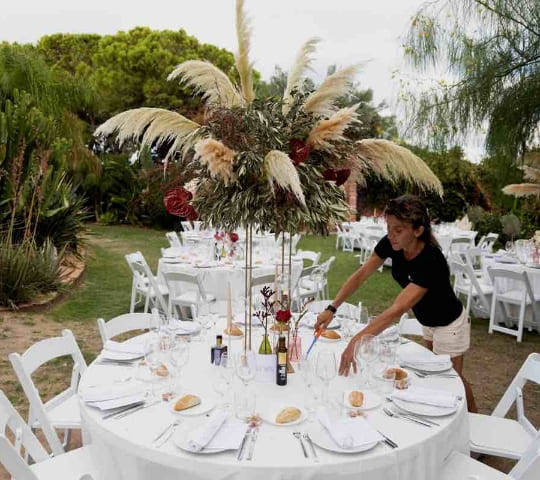
How to plan a wedding step by step: a 12-Month timeline
Planning a wedding usually takes around 12 to 18 months if you want a wide choice of venues and key suppliers, although a well-organised wedding can be planned in six months or less. The main milestones are setting the budget and guest list, booking the venue and core suppliers, defining the design, and finalising numbers, seating and the running order during the last month.
Where do you start when planning a wedding?
Start with three decisions: your approximate budget, guest count and preferred date or season. These determine which venues are realistic and how much remains for catering, floral design, photography, music and other suppliers. Before choosing decorative details, make sure the basic structure of the celebration works.
From my experience working on weddings and events in Barcelona and Catalonia, the right venue is not simply the most beautiful one. Access for suppliers, ceremony and reception areas, installation times, restrictions, guest logistics and a workable wet-weather plan can have a major impact on both the design and the smooth running of the day.
Wedding planning timeline
| When | What to finalise | Main priority |
| 12 months before | Date, budget and approximate guest list | Search for and book the venue. |
| 9 months before | Venue, catering and key suppliers | Secure professionals with limited availability. |
| 6 months before | Outfits, floral design and invitations | Define the visual concept and guest experience. |
| 3 months before | Menu tasting, music and final details | Confirm logistics, technical needs and Plan B. |
| 1 month before | Final numbers, seating plan and running order | Coordinate every supplier around one schedule. |
| Week before | Timings, contacts, installation and weather | Confirm everything; avoid redesigning the wedding. |
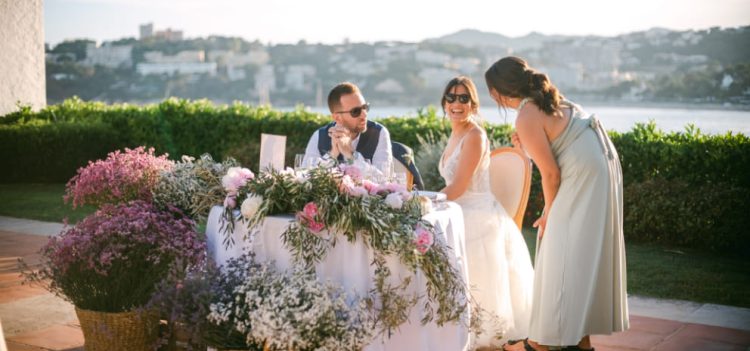
12 months before: date, budget and guest list
Around 12 months before the wedding, define a realistic budget, prepare an initial guest list and begin searching for the venue. For popular dates and peak-season weddings, starting 12 to 18 months ahead gives you more choice. Guest count affects venue size, catering, tables, transport and a large part of the overall budget.
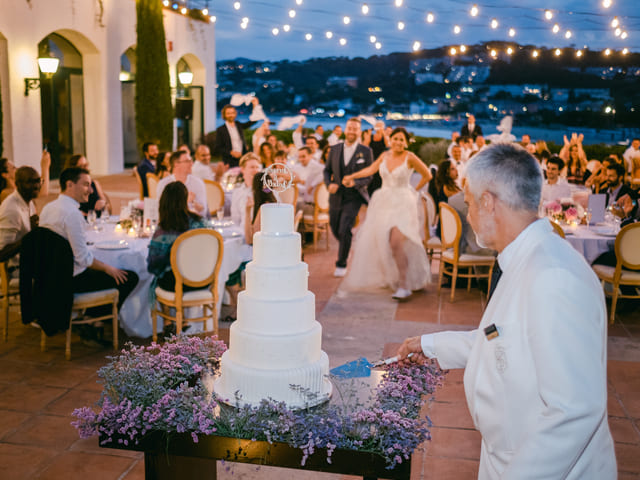
9 months before: venue, catering and key suppliers
Once the venue is secured, book suppliers whose availability is tied closely to the date: catering, photography and video, music, planning or coordination, and the professionals responsible for the main event design. Check contracts, deposits, access hours, installation restrictions and responsibilities early so that different suppliers are working from the same information.
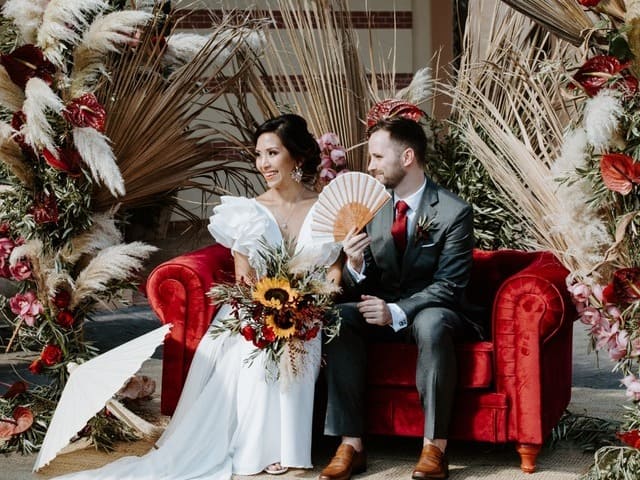
6 months before: outfits, floral design and invitations
At around six months, the visual direction can be developed in detail. Floral design works best as part of the overall event rather than as a collection of separate bouquets, arches and centrepieces. The table layout, ceremony setting, guest flow, architecture and strongest visual areas should all be considered before deciding where flowers will have the greatest impact.
In my work, concentrating the floral budget on the areas guests experience most can transform a venue more effectively than decorating every corner. Seasonality, colour palette, proportions and the existing character of the space should work together.
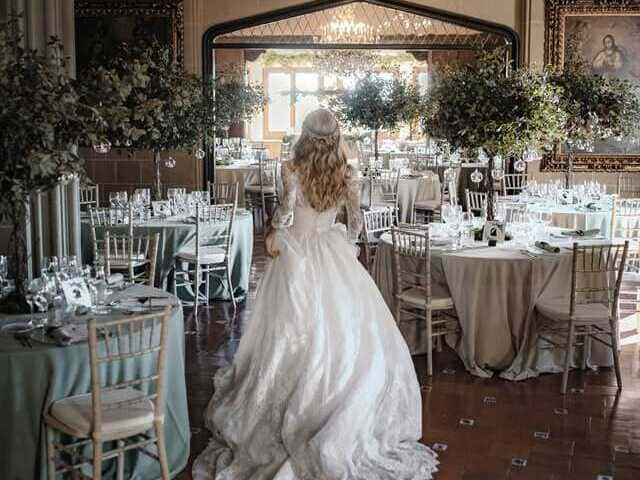
3 months before: menu tasting, music and final details
Three months before the wedding, finalise the menu, tastings, music, transport and the main production details. Check electrical requirements, supplier access, sound restrictions and installation times. This is also the moment to confirm exactly how an outdoor ceremony or reception will move indoors if the weather changes.
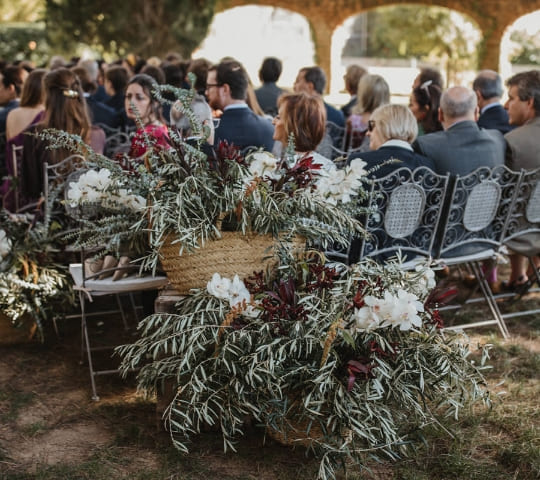
1 month before: final numbers, seating plan and running order
One month before, close the guest list, table numbers and seating plan. Suppliers can then adjust quantities and staffing. Create one final running order covering supplier arrivals, installation, ceremony, drinks reception, dinner, speeches, music and dismantling, with a named person responsible for each key stage.
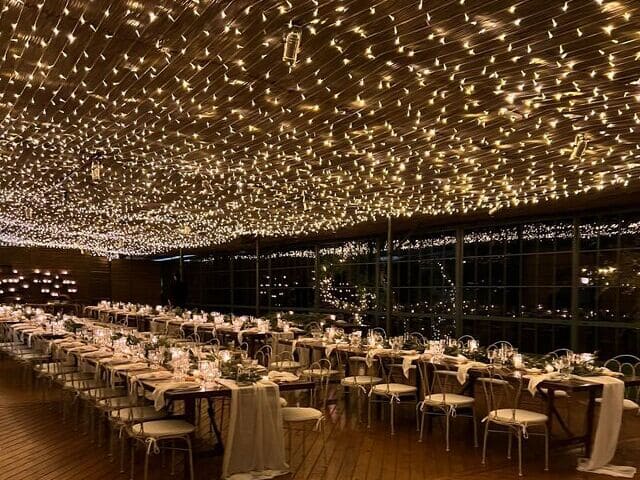
The week before and the wedding day
The final week is for confirmation rather than major changes. Recheck timings, contact numbers, deliveries, outstanding payments, weather and the backup plan. On the wedding day, one person should centralise supplier communication and unexpected issues so the couple and their families are not managing logistics during the celebration.
What do you need to plan a wedding?
You need a defined budget, approximate guest list, suitable venue, confirmed suppliers and a clear decision calendar. A wedding can easily involve 8 to 12 different suppliers, so a numbered checklist and one shared running order reduce missed details and conflicting instructions during the final weeks.
- Set the budget and keep a contingency for unexpected costs.
- Prepare an approximate guest list.
- Choose the date, area and venue, including a realistic wet-weather plan.
- Book catering and the key date-dependent suppliers.
- Define the ceremony, style, floral design and overall event concept.
- Organise photography, video, music, lighting and technical requirements.
- Arrange invitations, guest transport and accommodation where necessary.
- Finalise menu choices, RSVPs and the seating plan.
- Create one running order and share the key contact details.
- Confirm installation, dismantling, access times and the weather alternative.
How long does it take to plan a wedding? Can you do it in six months?
Twelve to 18 months gives couples the widest choice of venues and suppliers, but six months can be enough with focused decision-making. The shorter the planning period, the more important flexibility becomes. Secure the venue and essential suppliers first, then simplify lower-priority details rather than trying to compress every possible wedding task into the schedule.
Planning a wedding in Spain from abroad: what changes?
Planning a wedding in Spain from abroad requires more emphasis on local logistics, remote decision-making and guest travel. Choose suppliers who can work clearly by email or video call, group venue visits and tastings into one trip where possible, and confirm transport, accommodation, access times and local restrictions well before guests arrive.
For destination weddings in Barcelona and Catalonia, I recommend having a local point of coordination for the final stages. A supplier team may need to manage deliveries, venue access, floral installation, rentals and last-minute weather changes while the couple is travelling or welcoming guests. Clear plans and one central contact make this considerably easier.
When is it worth hiring a wedding planner?
A wedding planner is particularly useful when you live abroad, have limited planning time, are organising a destination wedding or need to coordinate many suppliers. Professional coordination is also valuable for complex installations or multi-location celebrations because it centralises decisions, timings and contacts and keeps practical problems away from the couple on the day.
Frequently asked questions about planning a wedding
Start with your budget, approximate guest count and preferred date or season. These three decisions determine which venues are suitable and how much you can allocate to catering, design and other suppliers. Once they are clear, book the services whose availability depends most on the wedding date.
Planning 12 to 18 months ahead gives you more choice, particularly for popular venues and peak-season dates. A smaller wedding or a celebration with flexible timing can be organised faster. Whatever the timeframe, secure the venue and essential suppliers before focusing on smaller decorative details.
Yes. Six months is workable if you make the major decisions quickly and remain flexible about venues and suppliers. Book the venue, catering and key professionals first, then move directly into design and logistics. A clear checklist and one decision-maker for each area help keep the process efficient.
Choose a venue and suppliers who are comfortable working remotely, organise video calls, combine site visits and tastings into as few trips as possible, and plan guest travel early. For the final weeks, local coordination is especially useful for deliveries, installation, venue access and weather-related changes.